
GGOS · the operating system for autonomous hardware
The operating system for autonomous hardware.
Give any machine a job. It does it on its own — and proves it did.
Enroll any device, bind it to a mission, and it observes the world, runs AI on the edge, and acts. Mission Control governs comms, OTA and command across the fleet, wherever it is deployed.
Mission Edge · the device runtime
The body of a mission.
Mission Edge is the GGOS node — flight-grade compute that runs the apps you deploy, perceives and acts on its own at the edge, pulls telemetry, and signs every observation as tamper-evident evidence. Bring your own Android or Linux device, or build on our reference hardware.
Drives
- Compute
- Android 13 / Linux · ARM64 · on-device NPU
- Security
- mTLS · secure boot · signed OTA
- Proof
- Signed, tamper-evident evidence
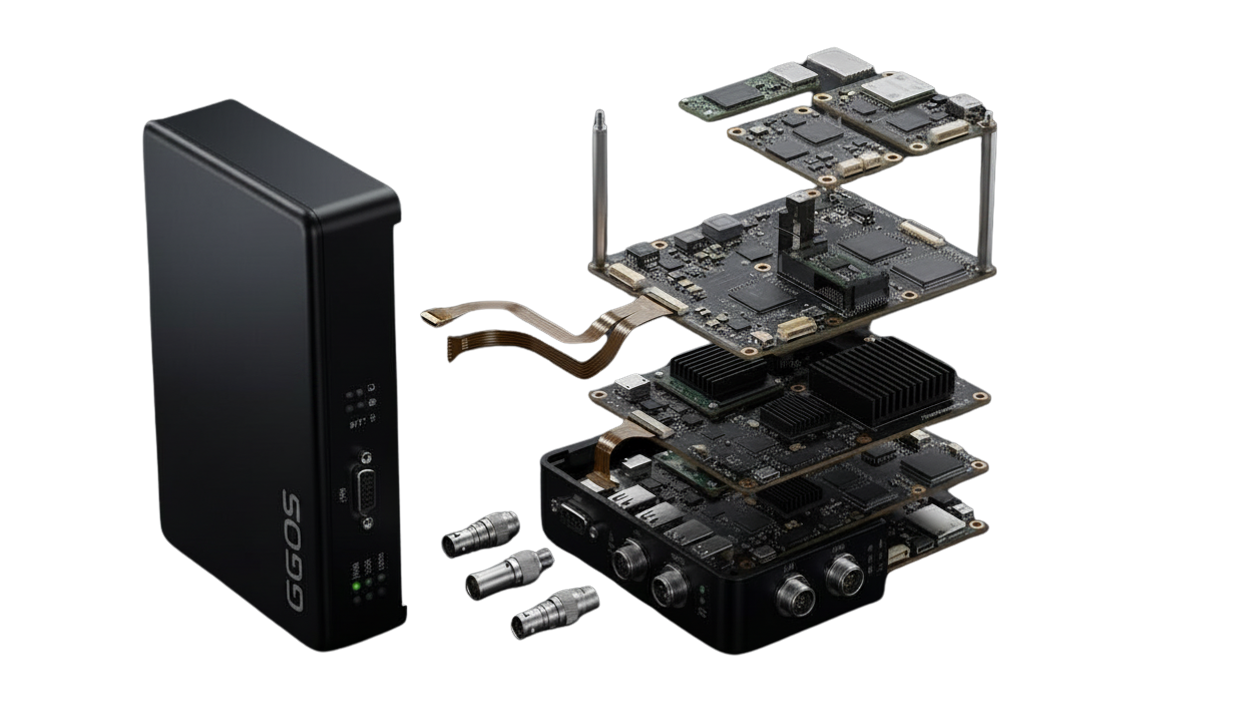
Software-first · hardware-agnostic
Bring your own hardware. Install GGOS.
The reference stack is the fast path, not the only one. GGOS deploys on any Android or Linux computer — we don’t support “a drone”, we support the machine inside it. Mission Edge binds to the cameras, sensors, screens and vehicles you already run, talking to external hardware over standard I/O. Same contract, same mission, your hardware.
If it runs Android or Linux and can execute a model on-device, GGOS turns it into a mission node — and drives the hardware around it. The contract is the spec; this is the surface it reaches.







Runs on
Drives & reads
Connects over
The primitive
A mission binds hardware to a job in the world.
Everything in GGOS is organized around the mission — a use-case-specific deployment with an objective, the hardware it runs on, the models it executes, a comms policy, and the evidence it must produce. Operators supervise many from one place; each device knows what it is for.
Mission Control · the control plane
One console, the whole fleet.
Enroll any device over mTLS, ship apps and missions OTA, command the fleet and stream its telemetry back — multi-tenant, on Android or Linux, wherever each node runs.
- Enroll
- Any device, over mTLS
- Deploy
- Apps & missions, OTA
- Command
- Governed C2, risk-tiered
- Observe
- Live telemetry & snapshots
- Govern
- Multi-tenant · RBAC
- Prove
- Signed, tamper-evident
Use case · autonomous out-of-home
Every screen in the city, turned into your channel.
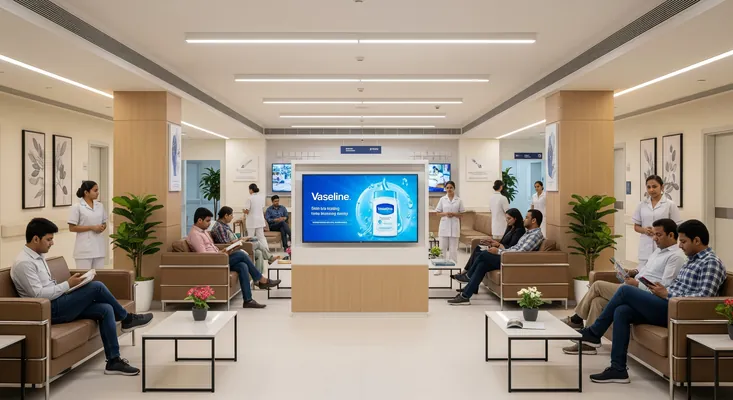
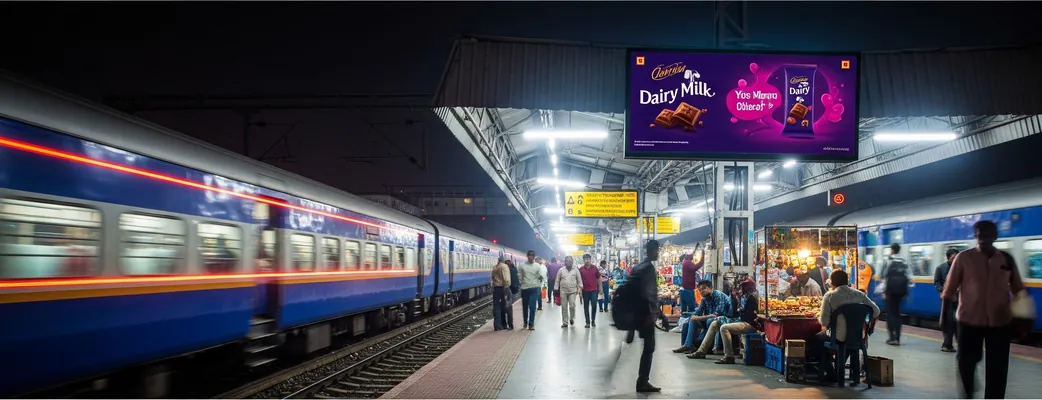
A brand wants reach — the right audience, in the right neighbourhoods, with proof it landed. The screens already exist: thousands of billboards, transit panels and retail displays, owned by dozens of operators, running dumb playlists blind to who’s in front of them.
GGOS makes that fragmented, third-party inventory behave like one programmable, provable medium — the campaign becomes a mission.
Mission objective
Maximum reach to the most likely audience neighbourhoods — and proof it landed.








- 01
Target
where the audience is
GGOS models where the brand’s most likely audience lives, works and moves — neighbourhood by neighbourhood — and ranks the screens, dayparts and moments that will actually reach them.
- 02
Bind
any screen, any owner
Every panel becomes a Mission Edge node regardless of who owns it or who built it — billboards, transit DOOH, retail displays — enrolled over standard I/O into one governed network.
- 03
Adapt
at the glass
On-device vision confirms the real audience in front of each screen — anonymised, nothing stored — and plays the creative that fits the moment, frame-accurate, even with the network down.
- 04
Prove
every impression
Each play is signed at the edge into tamper-evident evidence — who it reached, where and when — so the brand can verify its spend moved, not just trust a dashboard.
One operating system turns a fragmented, third-party out-of-home market into a single audience-driven, provable medium — same mission loop, same signed evidence as every other GGOS deployment. The screen is just the hardware this mission drives.
Brand-safe · anonymised, no PII · runs on inventory the brand doesn’t own
The GGOS stack
What the operating system is made of.
A control plane in the cloud, a runtime on every device, and a signed record between them. Commands and code descend; telemetry and proof rise. That’s the whole of GGOS — the same stack under every mission.
Control plane · cloud
Mission Control
Enroll any device over mTLS, ship apps and missions, command the fleet and stream its telemetry back — multi-tenant, wherever each node runs.
Mission Edge · the node
Drives
Any hardware
Screens, cameras, drones, robots and IIoT — bound over standard I/O, whoever owns or built them.
Observe · Act · Verify